SailGP: Penalties and how they can affect betting
SailGP: Penalties and how they can affect betting
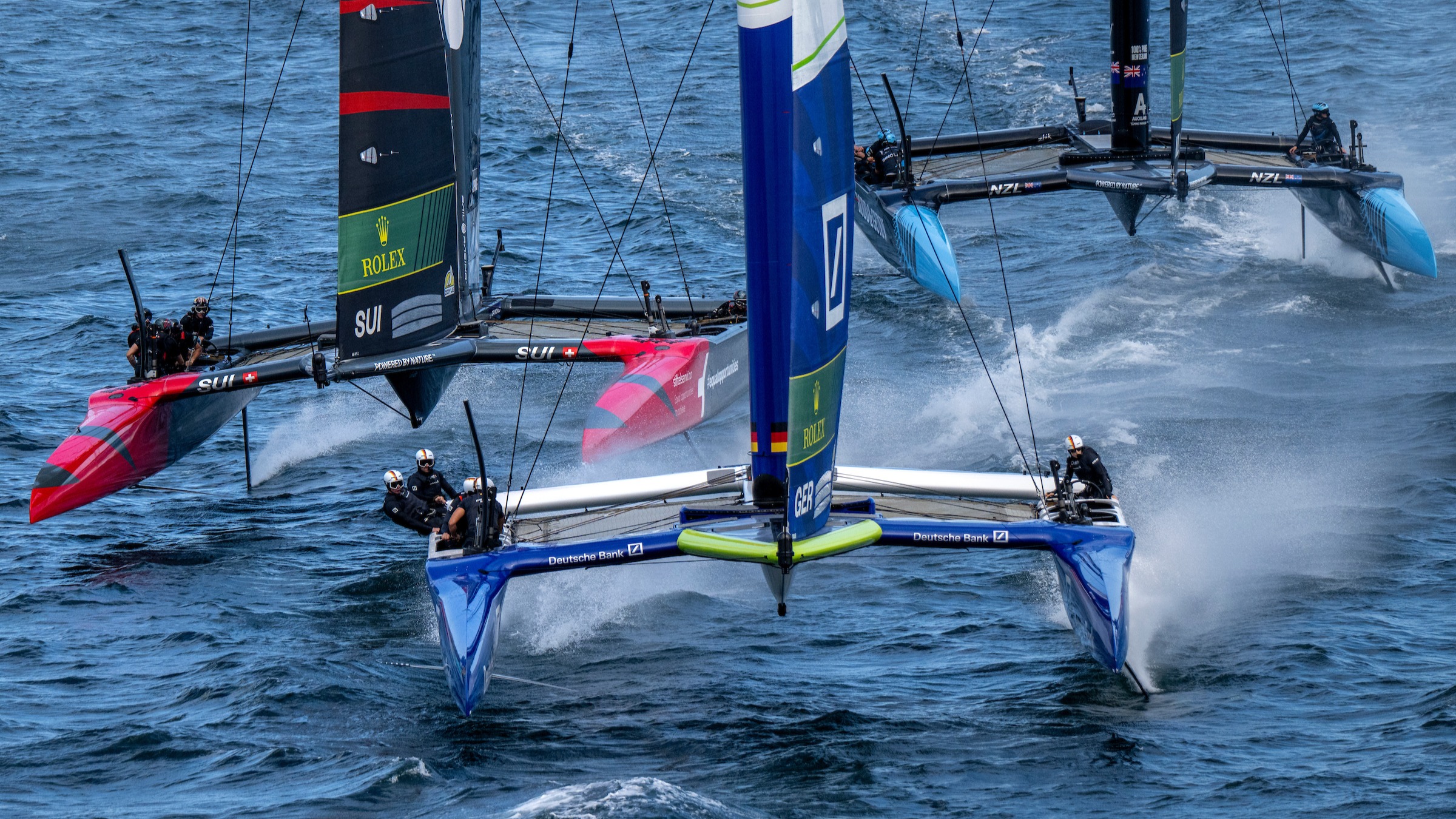
With a 12-strong F50 fleet flying at speeds approaching 100 km/h on tight racecourses around the world, SailGP’s racing action can get fast and furious. Penalties are a crucial way of ensuring the racing stays fair and equal for all teams, with offending teams punished for infringing the rules. A team of umpires located in SailGP’s broadcast studio in London uses a high-tech GPS tracking system to monitor the fleet at all times. The umpires dish out and announce penalties live during racing.
Betting tip: Whether it’s a collision, an early start, or crossing a race boundary, understanding how penalties work can give you the edge when picking a winner – knowing which teams are more likely to play it clean, or push the limits.
Boat on boat incidents
Tough rules are in place to ensure the F50s stay a safe distance apart and avoid collisions – which can result in athlete injuries and F50 damage. Umpires will only enforce boat on boat penalties if a team protests against the behavior of another team. If a team doesn’t protest, the umpires won’t get involved – even if the guilty team committed the penalty. But in the event of a collision, umpires will immediately hand out punishments.
Betting tip: Some teams are known for aggressive tactics as they look to balance risk and reward – exciting to watch, but riskier when it comes to possible point deductions.
Giving Way
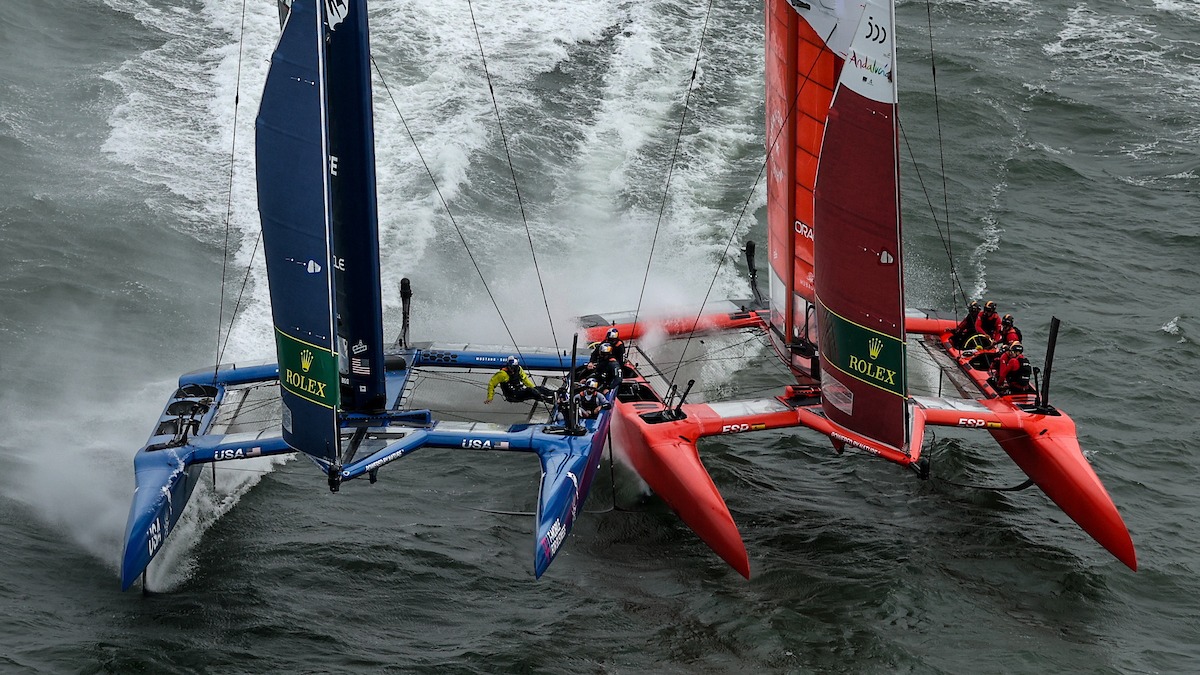
A boat on port tack (a boat that has the wind coming from the left hand side) must give way to a boat on starboard tack (a boat with the wind coming from the right hand side). If the boat on port tack comes too close to a boat on starboard tack, they’ll be penalized and have to drop behind the other team.
Betting tip: Watch for penalty opportunities as teams converge approaching a mark, particularly during the opening and closing stages when teams jostle for position.
Overlapping
When boats are going in the same direction, the boat closest to the wind – known as the windward boat – must keep out of the way. This means the boat furthest from the wind – the leeward boat – has the controlling position. When watching racing on TV, it’s easy to tell which boat is which. The right of way boat is highlighted by a green circle, while the keep clear boat is highlighted by a red one.
Collisions
Despite teams’ best efforts, collisions occasionally occur between the F50s, and even with the race marks. In this situation, the umpires impose penalty points, which are deducted both from a team’s event and season score. Penalty points aren’t only given to the guilty team. They can also be given to the team affected if the umpires rule it could have done more to avoid the collision.

Betting tip: A penalty in one race can shift the momentum of an entire event, or possibly a season! Backing consistent, low-penalty teams might offer better long-term value.
Race start
As the clock ticks down to the race start, the F50 fleet will jostle for position in the start box. But if teams mistime the start and cross the line early – even just 0.1 seconds before the gun – they’ll be punished severely and sent to the back of the pack. It’s easy to see if a team has picked up an early start penalty – also known as an ‘OCS penalty’ – a small ‘S’ will appear above its mast and it will need to drop behind the rest of the fleet before rounding Mark 1 to avoid picking up further penalties.
Betting tip: Some teams gamble at the start to gain an early lead – high-risk, high-reward. Others prefer to play it safe by hanging back and building through the race.
Boundary penalties
Despite being the best sailors in the world, it’s not uncommon to see teams stray beyond the course limits, either by accident or on purpose to gain a distance advantage. However, their errors won’t go unnoticed. SailGP’s team of umpires – watching remotely from London – is alerted if any team breaks the boundary thanks to the league’s cutting-edge GPS technology. In this situation, they’ll be ordered to drop a certain distance behind another team and usually clear this penalty by reducing their speed.
Betting tip: Watch out for teams taking aggressive lines near the edge of the course – they risk penalties, especially in tight tactical battles.
Black Flags
The ominously named Black Flag earns a team immediate disqualification. It will be shown to a team which puts another at high risk of serious collision or capsize during a race.
Betting tip: While rare, a Black Flag can have major consequences in tight leaderboard situations. A Black Flag not only ends a team’s race – it can also deal a major blow to their overall event.
How can penalties affect betting?
Penalties can affect the outcome of races, events and even whole seasons. Teams have vastly differing risk management strategies – some teams prefer the ‘high risk, high reward’ approach, while others opt for consistency. Each approach can pay off, but it’s important to note which teams favor which strategy when making your betting decisions.
Risk-takers go for bold maneuvers and aggressive tactics. They can pull off brilliant moves but they’re more likely to attract penalties. Consistency-driven teams focus on clean racing and safe decision-making. They may not always lead from the front, but they’re less likely to suffer big setbacks. Tracking team behaviors across events and seeing how they handle pressure can help inform smarter bets.
So whether you’re new to sailing or already picking your favorite team to back, keeping an eye on penalties can be the difference between a winning bet and a missed opportunity.
Starting points for our US readers
Starting points for our UK readers
Starting points for our Global readers
SailGP at Prediction Market Sites
Our Most Recent Articles for October 2026