The Foiling Revolution
The Foiling Revolution
SailGP’s F50 catamarans are the fastest and most advanced fleet-racing boats in the world, capable of reaching over 100 km/h in optimal conditions, but nimble enough to perform tight maneuvers and reward split-second tactical decisions. Cutting-edge T-foil technology enables the boats to lift clear of the water in search of breathtaking speed. These carbon-fiber foils come in two sizes – light-air and high-speed.
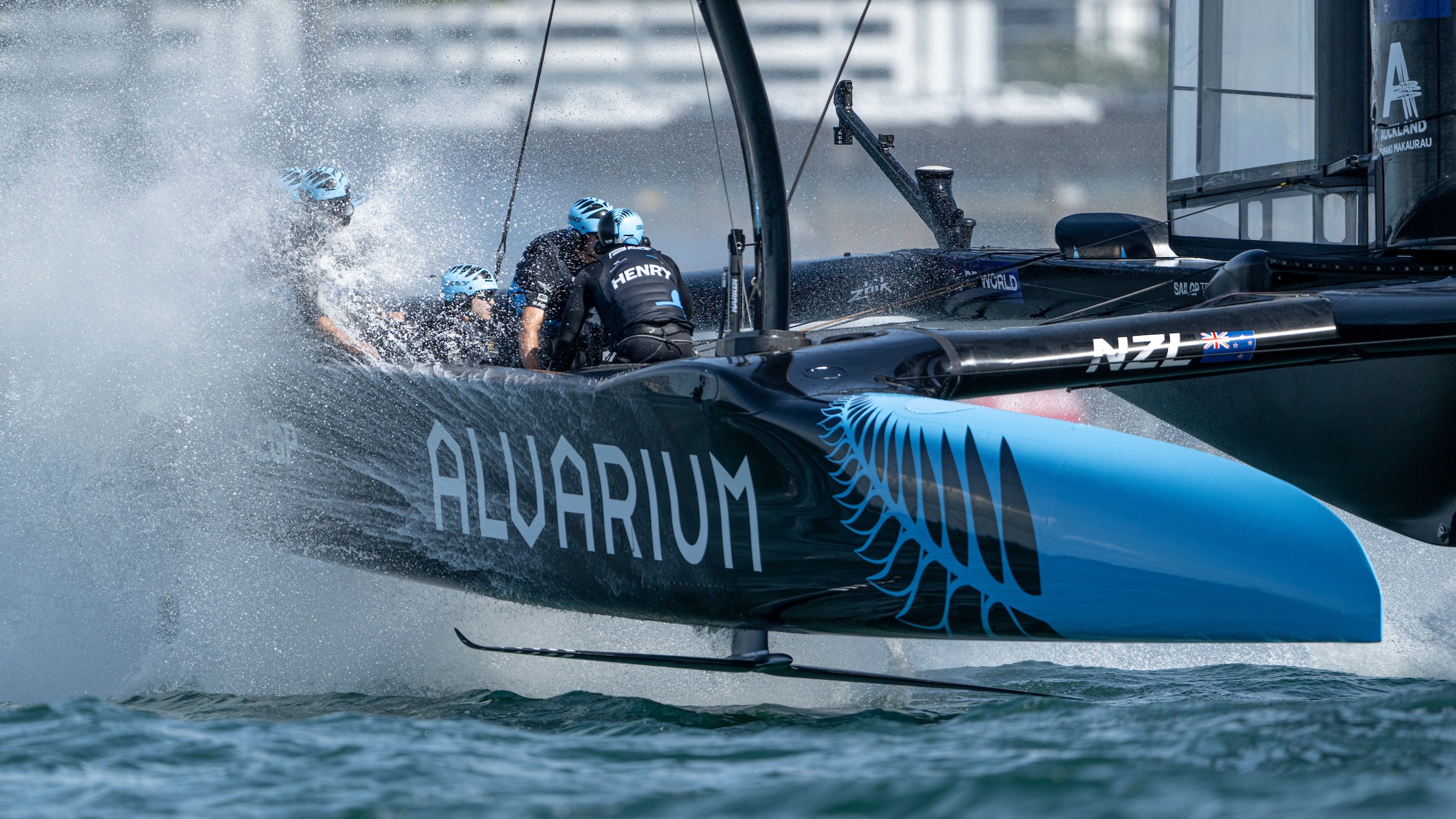 When you add in three different wings to choose from 18m, 24m and 29m, the F50 has a remarkably wide wind range. It can foil in winds as light as 8 km/h and remain under control in winds approaching 50 km/h. Regardless of the wind speed, the most important racing metric is foiling percentage – the amount of time a team foils during a race.
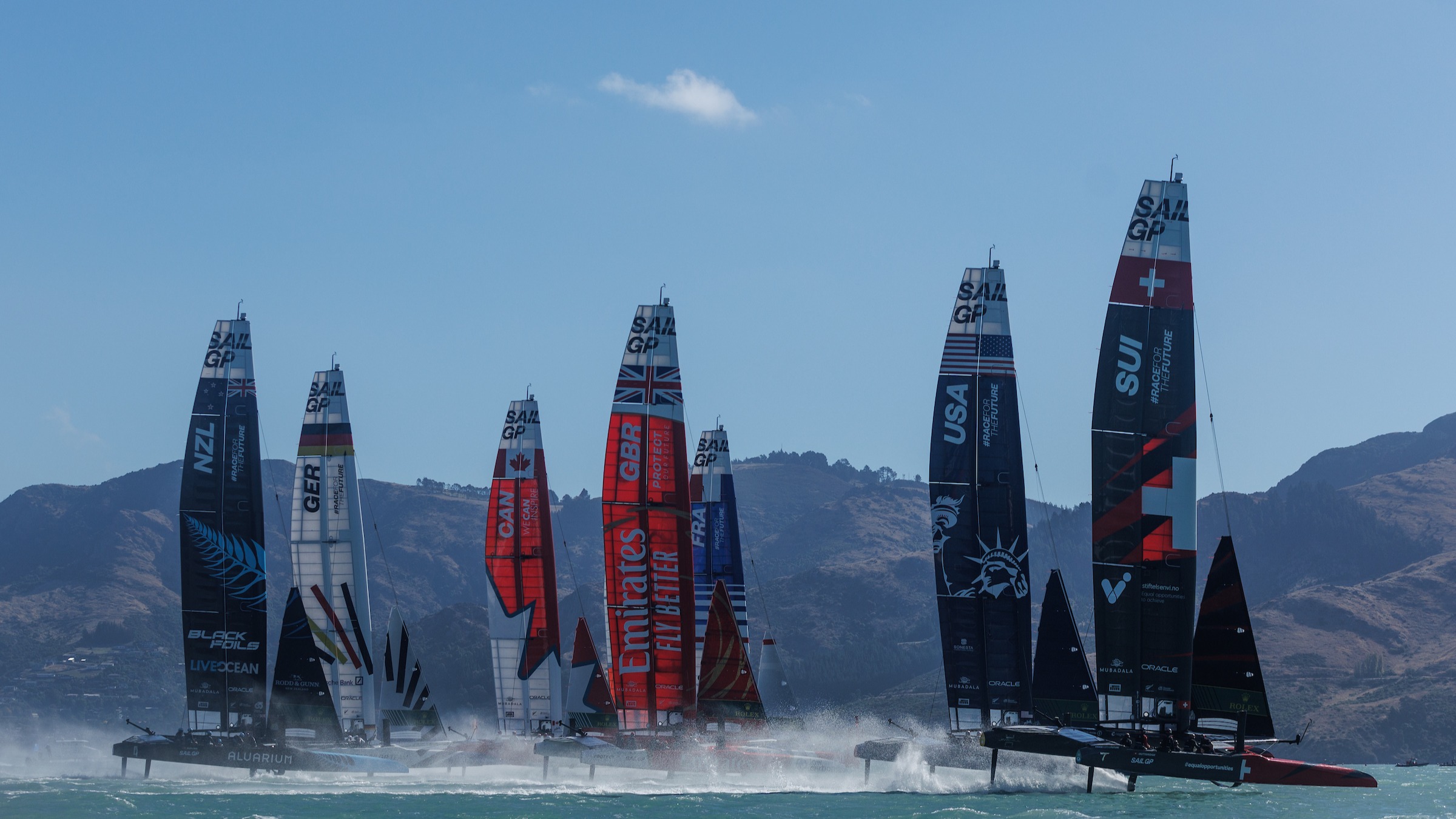 While it’s far from the only deciding factor in a race, more often than not, the teams with the highest percentage of time spent with both hulls flying clear of the water place in the top half of the fleet, while those who fall off the foils will finish towards the back of the back. In Season 4, the two teams with the highest average foiling time were New Zealand and Australia, which finished second and third respectively in the overall Championship.
 In medium wind conditions, teams will generally start and end the race on the foils. Whereas on the edges of the wind envelope – in very light and very heavy air – keeping the F50 under control and on the foils at all times is more challenging.
In light airs, keeping the F50 on the foils requires a deft touch and ability to anticipate variations in wind strength. It’s not unusual in these conditions to see teams sail extra distance to execute maneuvers without falling off the foils. It’s much easier to keep a boat on the foils than it is to lift off again after a nosedive.
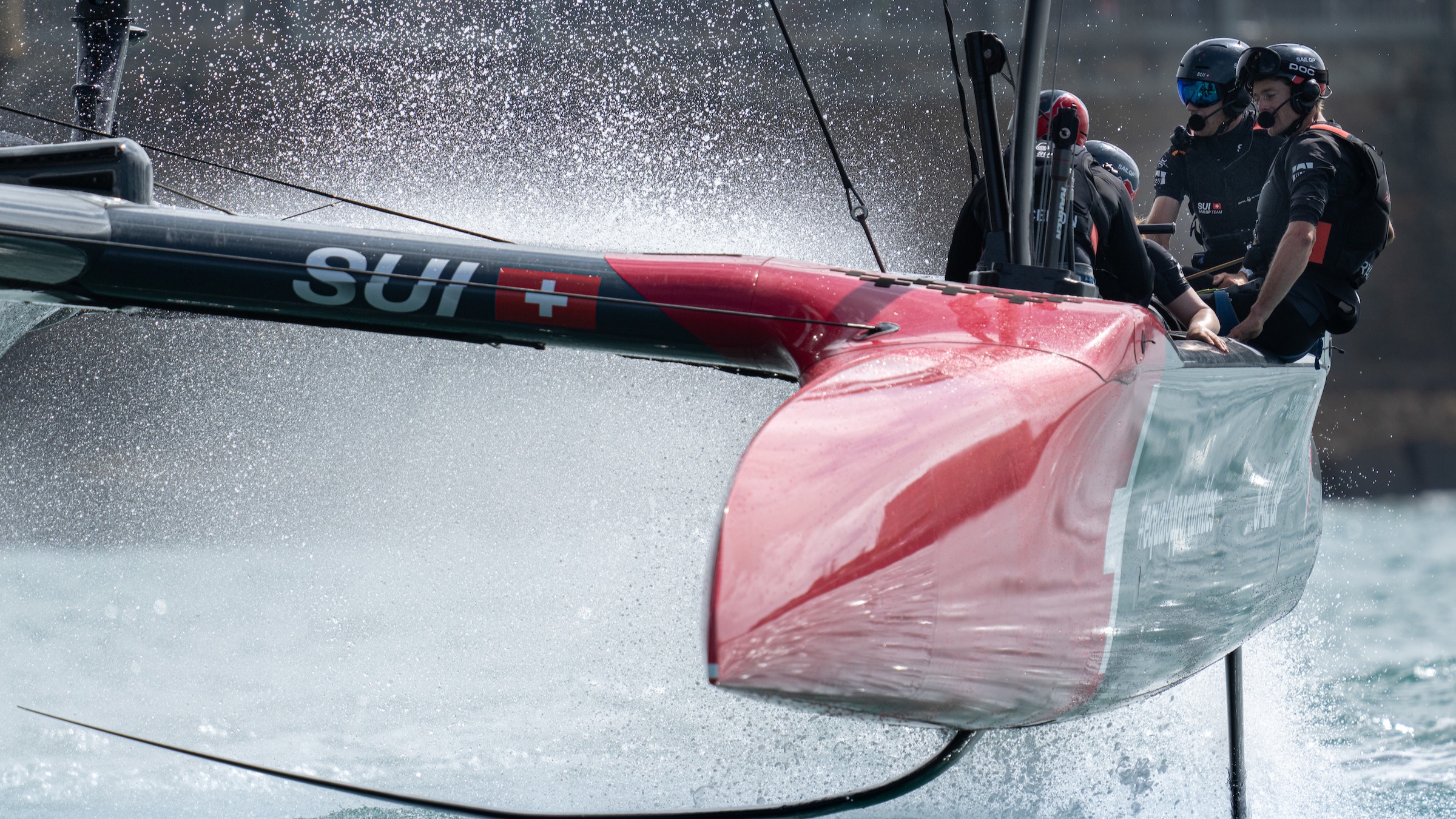 Hooking a gust at the right time can send a team soaring to the front of the pack, but the reverse can be true for any team which falls off the foils at the wrong moment. Commentators often refer to light air sailing as a game of snakes and ladders. No lead is safe in these conditions and mistakes are frequent.
It may be easier to rise onto the foils in heavy wind conditions, but there’s a much greater risk of the foils losing ‘grip’ on the water due to flying too high, resulting in dramatic capsizes or nosedives. Sometimes this results in a team losing places around the racetrack but a bad crash can end a race or even a whole weekend.
Starting points for our US readers
Starting points for our UK readers
Starting points for our Global readers
SailGP at Prediction Market Sites
Our Most Recent Articles for October 2026